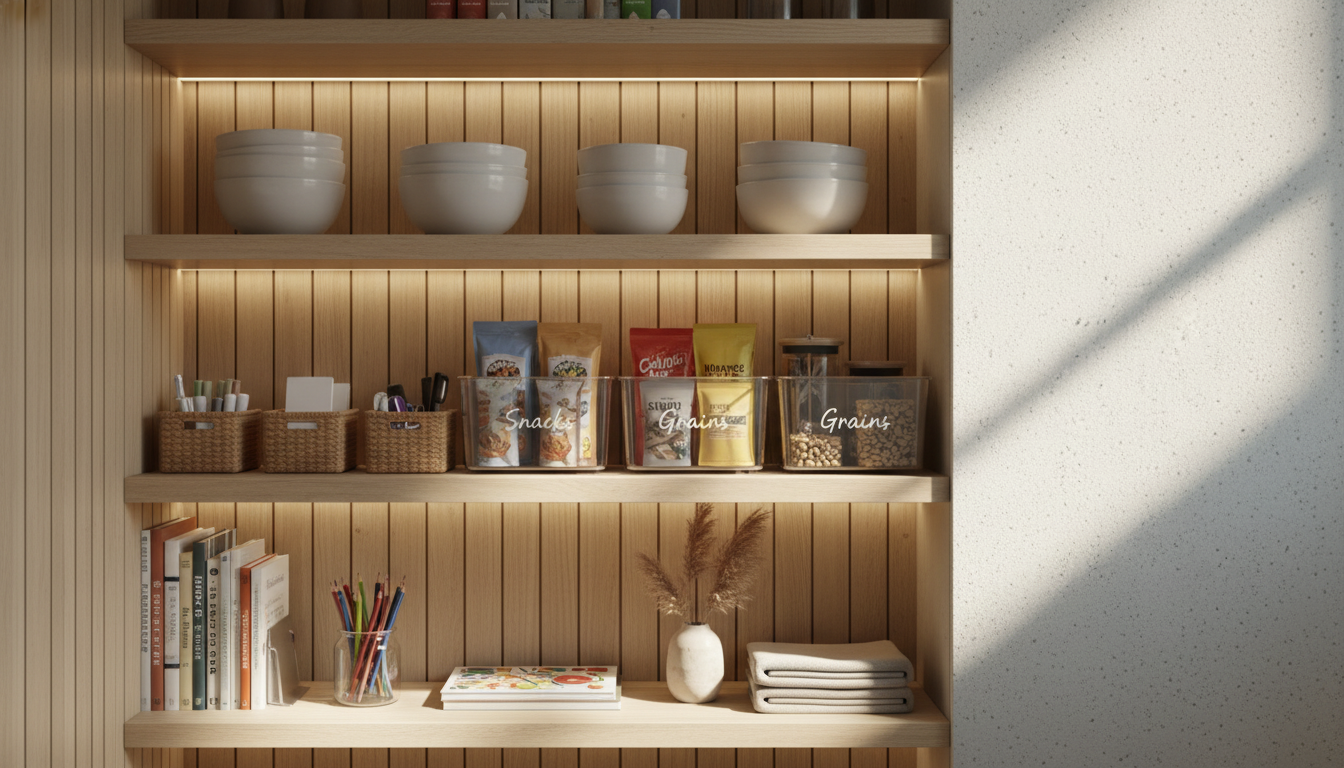
Organizing shelves by category makes everyday items easier to find, faster to put away, and simpler to maintain. A good category system doesn’t require picture-perfect styling—it’s a practical setup that matches real routines. The most reliable approach is simple: declutter first, build categories that make sense for how the household actually uses things, create clear zones, and label in a way that stays intuitive even when products change.
Piles feel quick in the moment, but they turn every “put away” decision into a mini debate. Categories solve that problem by creating predictable homes for items.
If stress has been building around clutter, a more predictable environment can help reduce friction in daily routines—something that matters because chronic stress affects the body and mind over time (see the American Psychological Association’s overview on stress and health).
The fastest declutter is the one that doesn’t explode into a whole-house mess. Keep it contained and repeatable.
For cleaning basics (especially when you’re resetting kitchens and bathrooms), follow the CDC guidance on cleaning and disinfecting in the home to keep the process safe and effective.
Strong categories are easy to scan and easy to explain. Start broad, then refine only when you feel friction.
| Area | Core categories | Helpful containers | Label example |
|---|---|---|---|
| Kitchen pantry | Breakfast, Baking, Snacks, Canned, Spices | Clear bins, risers, turntable | Baking • Snacks |
| Linen closet | Bath towels, Hand towels, Sheets, Guest, Backstock | Shelf dividers, fabric bins | Sheets • Queen |
| Bathroom | Daily care, Hair, First aid, Travel, Refills | Small trays, lidded bins | First Aid |
| Kids’ shelves | Books, Crafts, Games, Building sets, Keepsakes | Open bins, photo labels | Crafts |
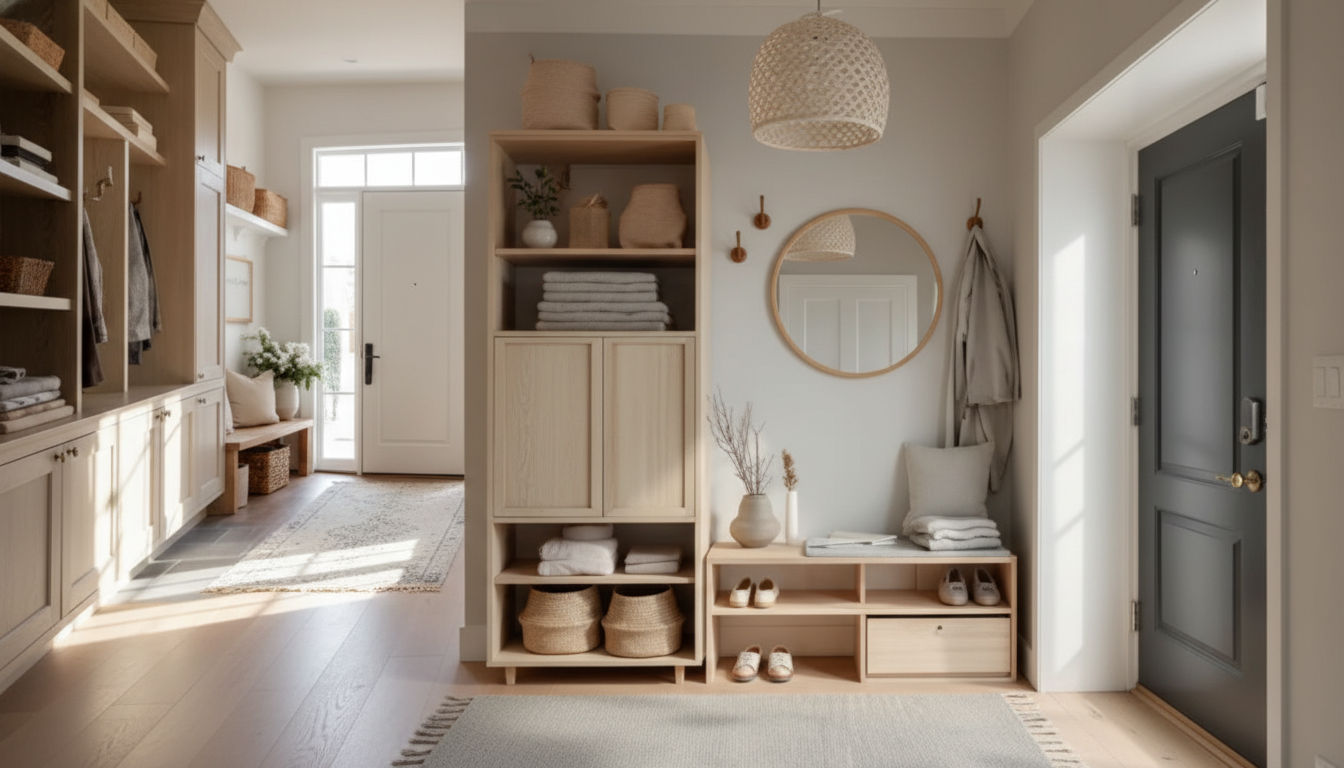
| Entry/utility | Keys/mail, Shoe care, Batteries, Tools, Seasonal | Catchall tray, small drawer bins | Batteries |
Zones protect your categories by putting “most used” where hands naturally go and pushing extras out of the way.
Containers aren’t just for looks—they’re the “fences” that stop category creep. When a category has a clear boundary, it stays contained even on busy weeks.
Labels should outlast brands, seasonal packaging changes, and impulse purchases. Think “category name” first.
Group “meal-building” categories together (pasta + sauce, tacos + tortillas, lunch items). Store backstock behind or above the active bin so the front-facing category remains easy to scan.
For deeper organizing principles and professional standards, the National Association of Productivity & Organizing Professionals (NAPO) is a helpful reference point.
It means grouping items by purpose or use (not by where they happened to land), then giving each group a clear boundary—like a shelf section or bin—so returning items becomes automatic.
Start with fewer, larger categories and split only when it becomes hard to scan. For most shelves, 2–5 categories works well depending on shelf size and how varied the items are.
Do a one-minute daily reset, a weekly scan of problem areas, and keep a small “staging” bin for items that need decisions. Labels that match the words your household uses make the system easier to maintain.






Leave a comment