Healthy Meal Plans Made Simple: One Week or One Month of Balanced Recipes
A structured meal plan removes daily decision fatigue, supports steady energy, and makes balanced nutrition easier to stick with. Whether you prefer a one-week reset or a one-month routine, the goal is the same: make meals predictable enough to be easy, but flexible enough to fit real life. Below is a practical way to plan breakfasts, lunches, dinners, and snacks—plus how to shop, prep, and swap ingredients without starting over.
What a balanced meal plan looks like in everyday life
Balanced eating doesn’t require perfect macros or complicated recipes. A simple, repeatable template can carry most meals:
- Build meals around a core template: protein + fiber-rich carbs + colorful produce + healthy fats.
- Prioritize consistency over perfection: repeatable breakfasts and mix-and-match lunches keep it sustainable.
- Use snacks strategically: they can prevent extreme hunger and support training days or long work shifts.
- Plan for real schedules: include quick meals, leftovers, and at least one “no-cook” option.
If you want a simple benchmark, use the general guidance found in USDA MyPlate and the Dietary Guidelines for Americans (2020–2025) to keep portions and food groups in a healthy range.
One-week vs one-month planning: choosing the right rhythm
The best plan is the one you’ll actually follow. Choose your planning “rhythm” based on how predictable your calendar is and how often you like to shop.
- One-week plans fit changing schedules, seasonal produce, and beginners who want less commitment.
- One-month plans reduce weekly planning time and support budget control through bulk buying.
- Hybrid approach: keep a month of options, then select a weekly lineup based on appointments and cravings.
- Planned flexibility: reserve 1–2 slots per week for eating out, using leftovers, or a “breakfast for dinner” night.
Planning formats compared
| Format |
Best for |
Pros |
Watch-outs |
| One-week plan |
Busy weeks, beginners |
Fresh variety, easy adjustments |
More frequent shopping and planning |
| Two-week plan |
Moderate routine |
Balanced structure and flexibility |
Still needs mid-cycle restock |
| One-month plan |
Stable schedules, budget focus |
Less planning time, bulk savings |
Requires smart freezing and variety strategy |
A simple daily structure: breakfast, lunch, dinner, and snacks
When meals “snap” into an easy framework, shopping gets simpler and leftovers become intentional.
- Breakfast: aim for protein + fiber (e.g., yogurt + berries + oats; eggs + veggies + toast).
- Lunch: build bowls/salads/wraps with a protein anchor and 2+ vegetables.
- Dinner: use a “3-part plate” (protein, vegetable, carb) or a one-pan meal that includes all three.
- Snacks: pair protein or healthy fat with fiber (e.g., apple + nut butter; hummus + carrots).
- Hydration and timing: drink water with meals, and place snacks to bridge long gaps between meals.
A helpful mindset: snacks aren’t “extra”; they’re tools. Used well, they can smooth out energy dips and reduce the urge to overdo it at the next meal.
Smart grocery planning for a week or a month
Start with a master list and let your plan tell you what to buy—rather than buying first and hoping meals happen.
- Start with a master list by category: proteins, produce, grains, dairy/alternatives, pantry, frozen, snacks.
- Plan cross-utilization: choose ingredients that show up in multiple meals (spinach, chicken, beans, rice, yogurt).
- Lean on frozen and shelf-stable staples: frozen vegetables, canned beans, oats, lentils reduce waste and save time.
- For month planning: schedule a mid-month produce restock and rotate fresh vs. frozen vegetables.
- Budget strategy: buy proteins in family packs and freeze portions; choose seasonal produce for better prices.
For additional weight-management-friendly meal habits and portion guidance, the CDC’s healthy eating resources offer practical, evidence-based tips.
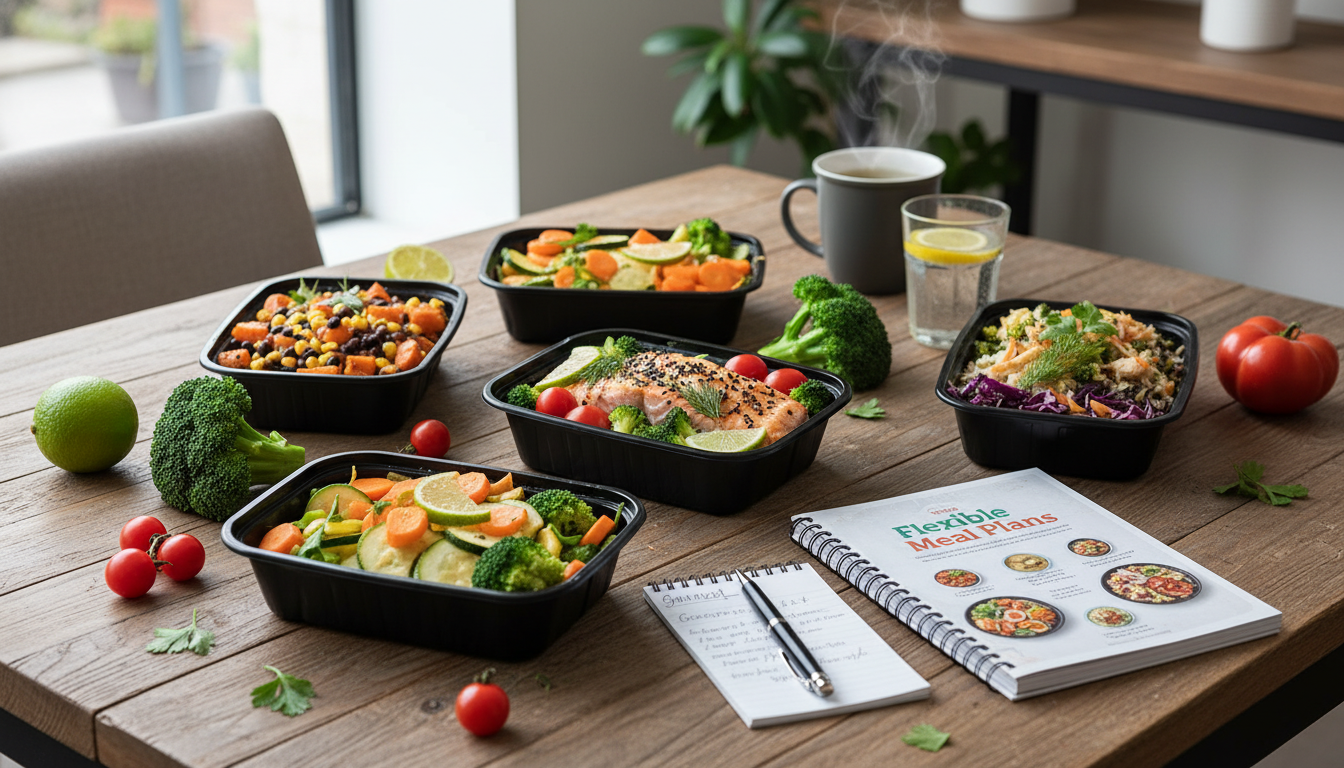
Prep in blocks: a 60–90 minute routine that saves the week
Meal prep works best when it’s modular. Instead of cooking seven full dinners, prep building blocks that can become many meals.
- Cook 1–2 proteins (roasted chicken, tofu, beans) and 1–2 carbs (rice, quinoa, potatoes) for mix-and-match meals.
- Wash and chop vegetables; store in clear containers for quick cooking and snacking.
- Make one sauce or dressing to add variety (lemon-tahini, yogurt-herb, salsa, vinaigrette).
- Batch-cook one freezer-friendly dinner (chili, soup, curry) as backup for busy nights.
- Use food safety basics: cool cooked foods quickly, store promptly, and label/date containers.
With these components ready, lunches can be as simple as “grain + protein + veggies + sauce,” and dinners can rotate between stir-fries, sheet-pan meals, and hearty bowls.
Easy swaps for common dietary needs
A plan stays useful when it bends without breaking. Keep a short list of swaps that match your preferences and pantry.
Using a recipe collection eBook to stay consistent
Featured resource: structured meal plan and recipes
FAQ
Is a one-month meal plan too repetitive?
It doesn’t have to be. Rotate weekly themes (tacos, stir-fry, pasta night), swap sauces and sides, and mix fresh and frozen produce; keeping 2–3 flexible meals per week helps prevent burnout.
How can snacks fit into a balanced plan without adding too many calories?
Use pre-portioned snacks and pair protein or healthy fat with fiber (like yogurt and fruit or hummus and veggies). Time snacks to match real hunger or training demands so they prevent overeating later instead of piling on extra.
What’s the simplest way to meal prep if time is limited?
In about 60 minutes, cook one protein, one grain, roast a sheet pan of vegetables, and mix one sauce or dressing. Then assemble bowls, wraps, salads, or quick plates throughout the week with minimal extra cooking.
Recommended for you





Leave a comment